
Complex Care at Home for Spinal Cord Injury: What Families Can Expect

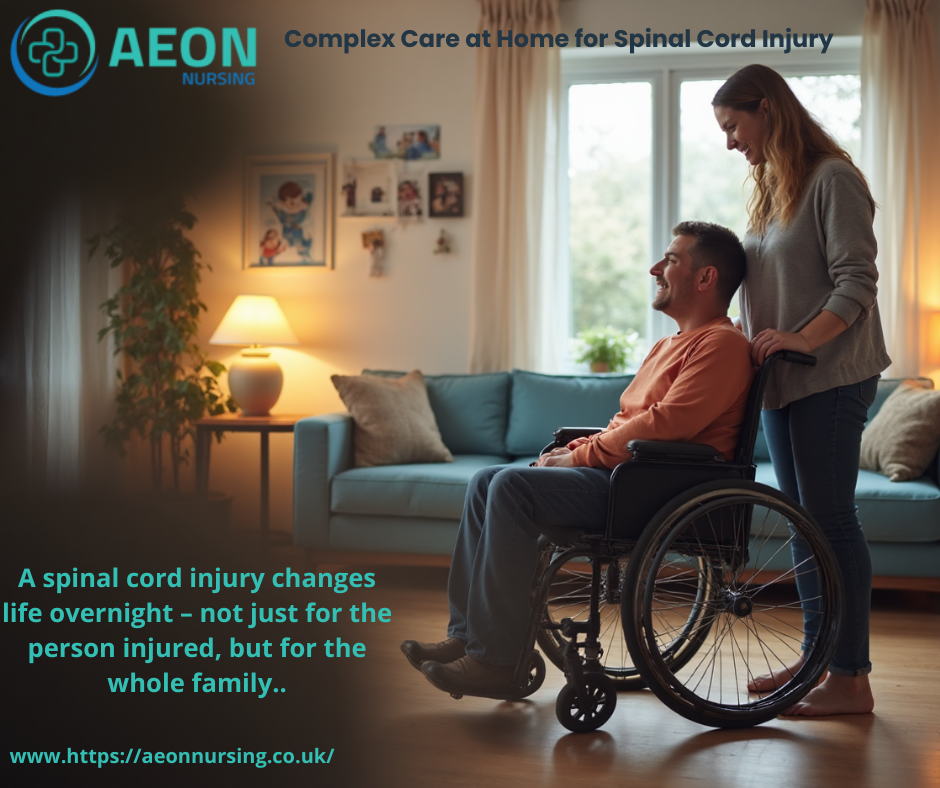
Complex Care at Home for Spinal Cord Injury: What Families Can Expect
A spinal cord injury (SCI) changes life overnight – for the person injured and for those who love them. After the hospital and rehab phase, the big question is often:
“Is it really safe to go home?”
For many people, the answer is yes. With the right spinal cord injury care at home and a nurse-led team, home can be both safe and fulfilling.
How spinal cord injury affects daily life
The impact depends on the level and severity of the injury, but many people will experience changes in:
-
Movement and strength
-
Sensation and temperature control
-
Bladder and bowel control
-
Sexual function
-
Risk of infections, pressure injuries and autonomic dysreflexia
At home this raises very practical questions:
-
How will we manage transfers?
-
How often do we need to reposition?
-
What routines will work for bowel and bladder care?
-
How do we spot complications early?
Key clinical tasks in SCI care at home
A good SCI care plan will address at least these four areas.
1. Breathing and chest care
Some people with high-level injuries need ventilatory support or help clearing secretions. At home this may include:
-
Monitoring breathing and oxygen levels
-
Using suction or cough assist devices
-
Recognising early signs of chest infection
2. Skin and pressure care
Reduced movement and feeling increases the risk of pressure injury. Prevention includes:
-
Specialist mattresses and cushions
-
Regular repositioning, day and night
-
Daily skin checks and rapid action on any redness or damage
3. Bowel and bladder management
Dignity and routine are essential. Your plan should cover:
-
Catheters or other bladder management
-
Bowel programmes – timings, techniques and products
-
Warning signs of constipation, blockages or infection
4. Spasticity, pain and autonomic dysreflexia
Spasms, neuropathic pain and autonomic dysreflexia can be frightening. Families need to know:
-
Typical triggers
-
Medication schedules
-
Red-flag symptoms that need urgent help
A nurse-led complex care team can train carers and family members in all these areas and provide ongoing clinical oversight.
Adapting the home for SCI
Your home environment is a key part of complex care.
Consider:
-
Sleeping: Is there space for a profiling bed and equipment?
-
Transfers: Can a hoist be used safely? Are doors wide enough?
-
Bathroom: Will you need a wet room, shower chair, commode or grab rails?
-
Access: How will you get in and out – ramps, lifts, level access?
-
Storage: Where will wheelchairs, hoists and supplies be kept?
This planning should be done alongside occupational therapists, rehab teams and your complex care provider.
Tip: Use our Spinal Cord Injury Home Care Planning Template to capture ideas, measurements and questions.
The emotional impact on families
SCI affects feelings as well as bodies. Common reactions include:
-
Grief for life “before”
-
Anger, fear or anxiety about the future
-
Role changes – partner or parent becoming “carer”
-
Worries about intimacy and body image
What helps:
-
Honest conversations – it’s okay to say this is hard
-
Involving the person with SCI in decisions about their care and goals
-
Support from peers, counsellors, charities and your care team
The best complex care looks after both clinical needs and emotional wellbeing.
How a nurse-led complex care team helps
At Aeon Nursing, a spinal cord injury package at home usually includes:
-
A detailed nurse-led assessment of clinical needs and risks
-
A personalised care plan and escalation plan
-
A trained team of carers and nurses, supervised by senior clinicians
-
Regular reviews as needs or goals change
Your team might support with:
-
Personal care, transfers and positioning
-
Bowel, bladder and skin care
-
Clinical observations and early identification of problems
-
Supporting you to return to hobbies, work, study or family activities
The aim is simple: safety, dignity and quality of life at home.
Looking after yourself as a carer
Caring for someone with SCI is demanding. You need support too.
Build in:
-
Regular respite – even short breaks help
-
Clear boundaries around what you can and can’t do
-
Sources of emotional support – friends, groups, counselling
Asking for help is not failing your loved one. It’s what keeps you going.
Next steps with Aeon Nursing
If you’re planning spinal cord injury care at home, Aeon Nursing can:
-
Liaise with your spinal unit and rehab team
-
Help plan your home environment and equipment
-
Design a nurse-led care package that matches your goals
-
Support with NHS Continuing Healthcare and other funding routes
Important information
This article provides general information about spinal cord injury care at home and does not replace personalised advice from your healthcare team. Any care from Aeon Nursing is subject to full assessment, risk review and local service availability. Examples given are anonymised or composite and for illustration only. The planning template is a support tool and does not guarantee any specific service, funding or outcome.
Author & Content Writer: Dr Naeem Aslam
Write a Comment