Accessible Information in Home Care: What Families Can Ask For

A practical guide to identifying, recording, flagging, sharing, meeting and reviewing accessible communication needs in home care. …
Mental Capacity at Home: The 5 Principles and a Safe Best-Interests Process
A careful guide to the five Mental Capacity Act principles, decision-specific assessment, best interests, recording and review at home. …
Consent in Home Care: Who Can Decide and How Should Choices Be Recorded?
A practical guide to informed choice, refusal, recording consent, mental capacity and questions families can ask a home-care team. …

Personal Health Budgets: 3 Ways to Manage the Money and 9 Provider Questions
Compare three ways to manage a personal health budget and nine provider questions about scope, responsibility, staffing, cost and review. …

Mental Health and Complex Care at Home: 7 Questions for a Person-Centred Support Plan
Seven practical questions for a person-centred mental-health support plan covering choice, communication, coordination, safety and review. …
Personal Care vs Treatment of Disease, Disorder or Injury: A Family Guide
A family guide to Personal care and TDDI, CQC registration, delegated tasks, competency, oversight and questions to ask a provider. …
Flu Vaccination and Complex Care at Home: What the 2026/27 Programme Says
A practical family guide to the 2026/27 flu vaccination programme, care-plan records, communication and questions for the NHS team. …
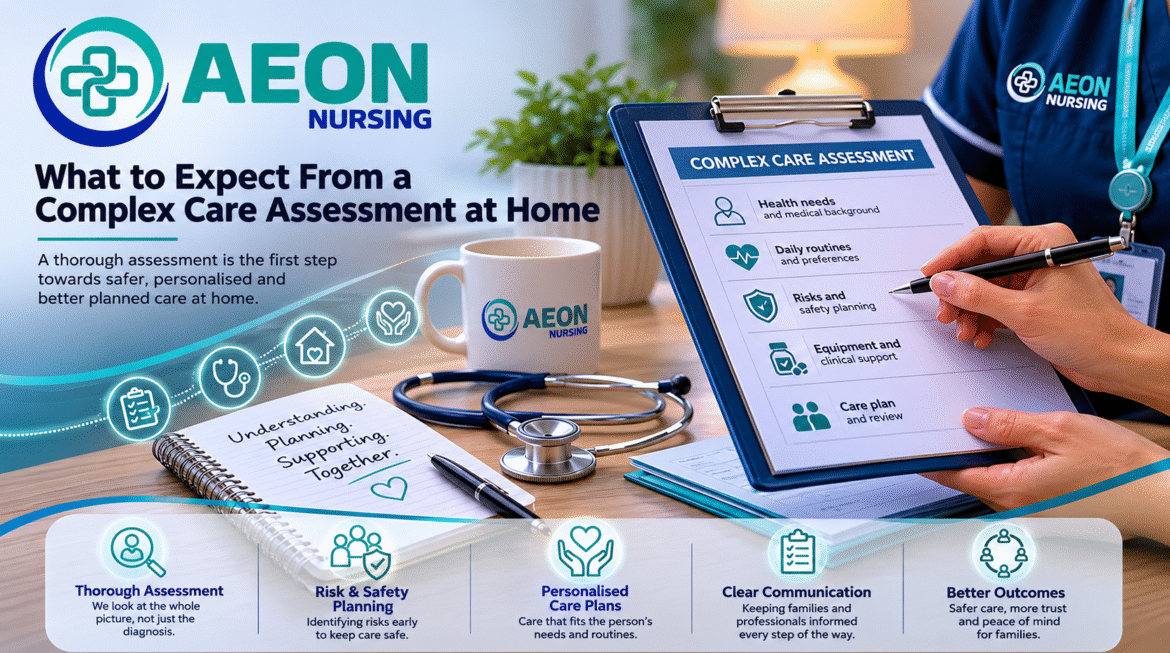
Complex Care Assessment at Home: 7 Safe Checks
A complex care assessment at home is a conversation and information-gathering process, not simply a form. It should help the person, family and relevant professionals understand current needs, what matters day to day, who is involved and what still needs assessment or a decision. The right complex care assessment at home is individual. It should not be based only on a diagnosis, a hospital summary or assumptions about what another person needed. The person’s wishes, current circumstances and the advice of relevant professionals matter. This guide offers seven safe checks to help families and referrers prepare for a complex care …
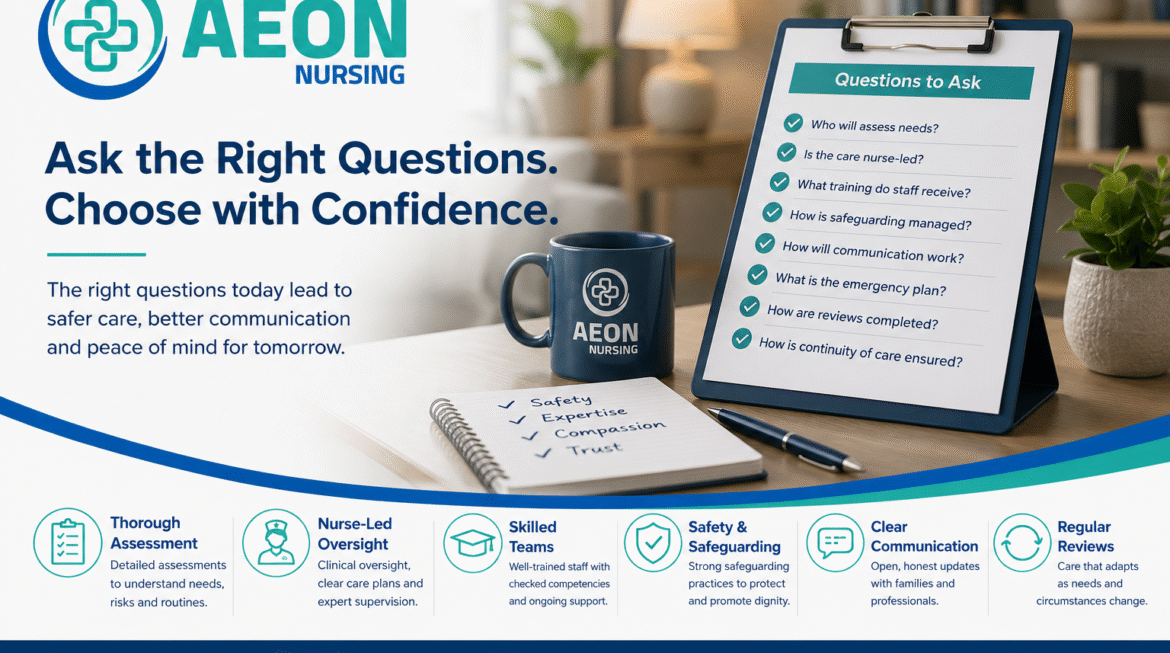
7 Essential Questions Before Arranging Complex Care at Home
The most useful questions before arranging complex care at home are the ones that reveal how a proposed service will work in real life. Families need more than reassuring promises. They need to understand the assessment, staffing, care plan, communication, safeguards, costs and review process before support begins. This can be difficult when a relative is leaving hospital, needs have changed quickly or several organisations are involved. A family may be speaking with ward staff, community professionals, an NHS team, social care and several providers at the same time. Writing down the same core questions for every conversation can make …
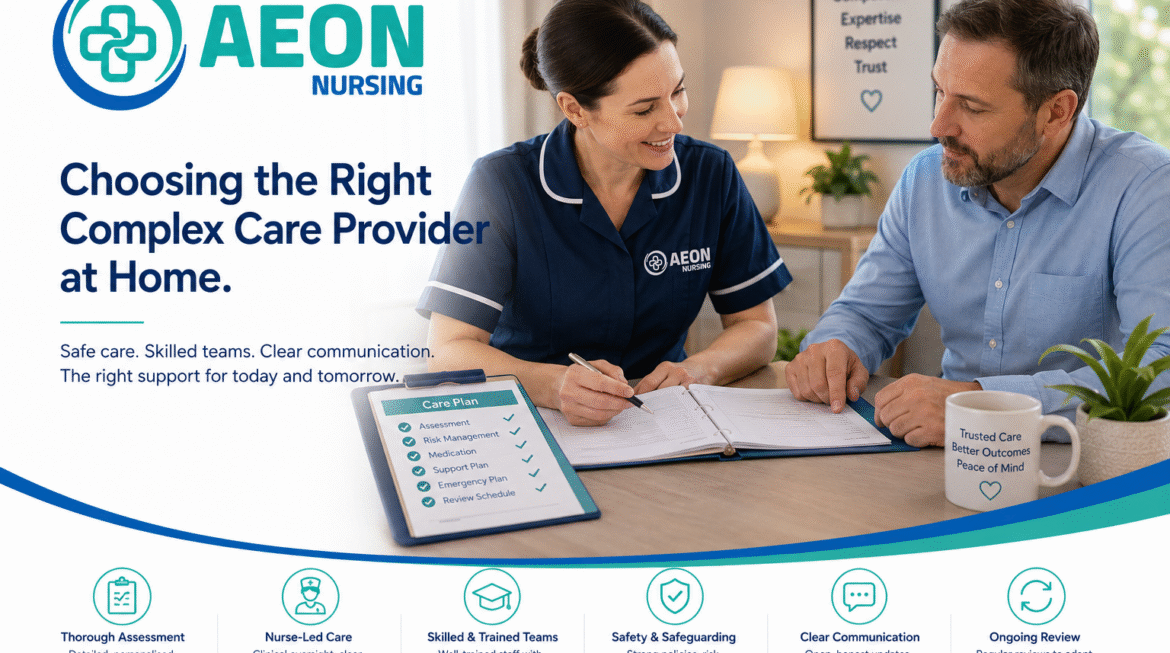
How to Choose a Safe Complex Care Provider at Home
How to Choose a Safe Complex Care Provider at Home Choosing a complex care provider at home is a serious decision. Families often make this choice during a stressful time. A loved one may be leaving hospital. A child may need more support at home. An adult with complex needs may need a safer care plan. Therefore, families need clear information before they decide. Complex care at home is not the same as basic help with daily tasks. It may involve support with serious health conditions, mobility needs, respiratory care, PEG feeding, seizure risk, brain injury, spinal injury, palliative needs, …