
Personal Health Budgets: 3 Ways to Manage the Money and 9 Provider Questions

Compare three ways to manage a personal health budget and nine provider questions about scope, responsibility, staffing, cost and review. …
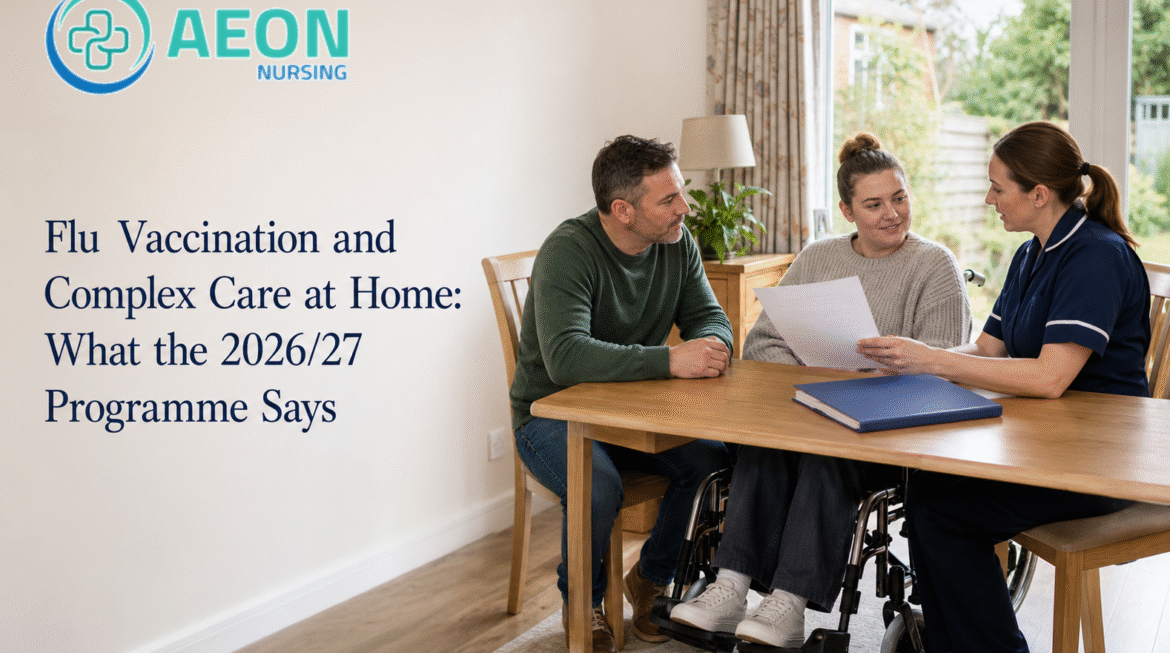
Flu Vaccination and Complex Care at Home: What the 2026/27 Programme Says
A practical family guide to the 2026/27 flu vaccination programme, care-plan records, communication and questions for the NHS team. …

Severe Physical Disabilities at Home: 7 Essential Support Checks
Adults living with severe physical disabilities are individuals with their own abilities, relationships, work, interests, culture, communication and goals. Some people need limited practical assistance; others require support across personal care, movement, equipment or clinical tasks. A diagnosis or visible impairment alone does not define the right home arrangement. Support for severe physical disabilities should begin with what matters to the person and which barriers affect daily life. The home, equipment, staffing, transport, communication and wider services may all influence independence. Good support enables choice and participation while managing assessed risks; it should not assume that safety requires taking control …

Complex Care After Hospital Discharge: 7 Essential Family Checks
Complex care after hospital discharge can feel like several decisions arriving at once. A person may be clinically ready to leave an inpatient bed while still needing medicines, equipment, mobility support, personal care, monitoring or input from community professionals. Families need a coordinated plan that identifies what will happen at home and who is responsible for each action. A safe transition is more than transport and a start date. Complex care after hospital discharge should connect the hospital plan, community services, homecare provider, person and family. It should explain the person’s current needs, what trained workers are authorised to do, …

First Week of Live-In Care: 7 Essential Family Checks
The first week of live-in care is a settling-in period for the person receiving support, the care worker, family members and the provider. Even when assessment has been thorough, everyday details become clearer once support begins in the actual home. The aim is to establish safe routines without making the person feel that control of their home has been taken away. Live-in care does not automatically mean one worker is awake and working every hour of the day. The first week of live-in care should confirm agreed working arrangements, rest and breaks, any overnight support, backup cover and the tasks …

Signs a Loved One May Need Live-In Complex Care: 7 Essential Checks
The signs a loved one may need live-in complex care are rarely captured by one difficult day. Families often notice a pattern: everyday routines take longer, health needs are harder to coordinate, nights become less settled, or one relative is carrying more responsibility than they can sustain. Writing down what is changing can make the next conversation more useful. Live-in complex care is not automatically the right response to age, disability, a diagnosis or a hospital admission. It is one possible model of support at home. Suitability depends on the person’s wishes, assessed needs, risks, home environment, clinical plan, available …

Residential Care vs Live-In Complex Care: 7 Safety Checks
A comparison of live-in complex care vs residential care should never begin with the claim that one setting is safer for everyone. Safety depends on the person’s assessed needs, preferences, home, workforce, clinical plan, night support, equipment, emergency arrangements and the ability of a specific provider to deliver the agreed care. Residential care, nursing care and live-in support are different service models, and provision varies between organisations. Some people value remaining at home with a familiar routine. Others may benefit from the environment, staffing or facilities of a suitable care home. The decision should be individual, evidence-led and regularly reviewed. …

Care Home vs Live-In Complex Care: 7 Safety Checks
A care home vs live-in complex care decision is rarely as simple as choosing a building or staying at home. Families need to compare the person’s assessed needs, wishes, clinical tasks, staffing, nights, environment, social life, affordability and the evidence offered by specific providers. Neither option is automatically safer or kinder. A suitable care home may provide facilities, staff and social opportunities that fit one person. A well-designed live-in package may support another person in familiar surroundings. The responsible choice is the one that can meet current needs safely and remain sustainable. The NHS guide to care homes and other …

Night-Time Dementia Care: 7 Safer Night Checks
Night-time dementia care can be difficult for the person living with dementia and for everyone sharing the home. Waking, confusion about time, calling out, trying to get up, anxiety or changes in routine can leave families worried about safety and unable to rest. There is rarely one universal cause or one universal solution. The first aim is to understand what is happening for this person and to reduce avoidable risk without removing dignity, choice or comfort. The second is to recognise when family night cover is no longer safe or sustainable and when an assessed support plan needs to change. …

Respite Complex Care at Home: 7 Safe Planning Checks
Respite complex care at home can give family carers time to rest, attend appointments, work, sleep or spend time with other people who matter to them, while helping the person receiving care remain in familiar surroundings. A planned break is not a sign that a family has failed; sustained caring can be demanding, especially where care includes complex needs, changing routines or overnight support. The right arrangement depends on the person, their current care plan, the tasks involved, the skills and authority required, the home environment, consent and communication needs, the provider’s capability, funding arrangements and the family’s priorities. A …