
Skin Integrity and Pressure Care at Home: Questions to Ask a Care Provider

Questions families can ask about pressure care at home, dignity, planning, staff preparation and review. …

Catheter and Stoma Support at Home: 7 Family Questions
Seven practical questions families can use when planning catheter and stoma support at home. …

Seizure Support at Home for Children: 7 Safe Planning Checks
Seizure support at home for children can feel difficult to plan because a child’s needs, routines and professional advice are individual. Families may be balancing school, sleep, play, appointments and the understandable wish for home to remain a comfortable family space. The child’s current care plan and the professionals responsible for their care should guide individual decisions. This guide sets out seven safe planning checks for seizure support at home for children. It is general information for conversations and preparation; it is not medical, nursing, safeguarding, legal, education or funding advice for an individual child. A plan cannot guarantee that …

Clinically Led Home Care: 7 Essential Checks for Safe Support
Clinically led home care is designed for situations where ordinary day-to-day assistance may not be enough on its own. A person may need support that depends on structured assessment, careful risk planning, competent staff, timely monitoring and clear professional escalation. The aim is not to make home feel like a hospital. It is to bring the right level of oversight into a familiar environment while protecting dignity, choice and ordinary life. The phrase can be confusing because providers use it in different ways. Families should therefore look beyond the label and ask who provides the clinical leadership, what decisions that …
Respiratory Complex Care at Home: 7 Essential Safety Checks
Respiratory complex care at home can help a person live in familiar surroundings while following an assessed plan for breathing support, monitoring, equipment and daily care. It may be relevant to people with long-term respiratory disease, neurological conditions, spinal injury or another condition that affects breathing. The exact package must always reflect the individual rather than a broad diagnosis. Home can offer comfort, routines, family contact and greater control over ordinary life, but it does not remove clinical risk. Respiratory needs can change, equipment can fail and symptoms may require urgent assessment. Safe community respiratory care therefore depends on current …
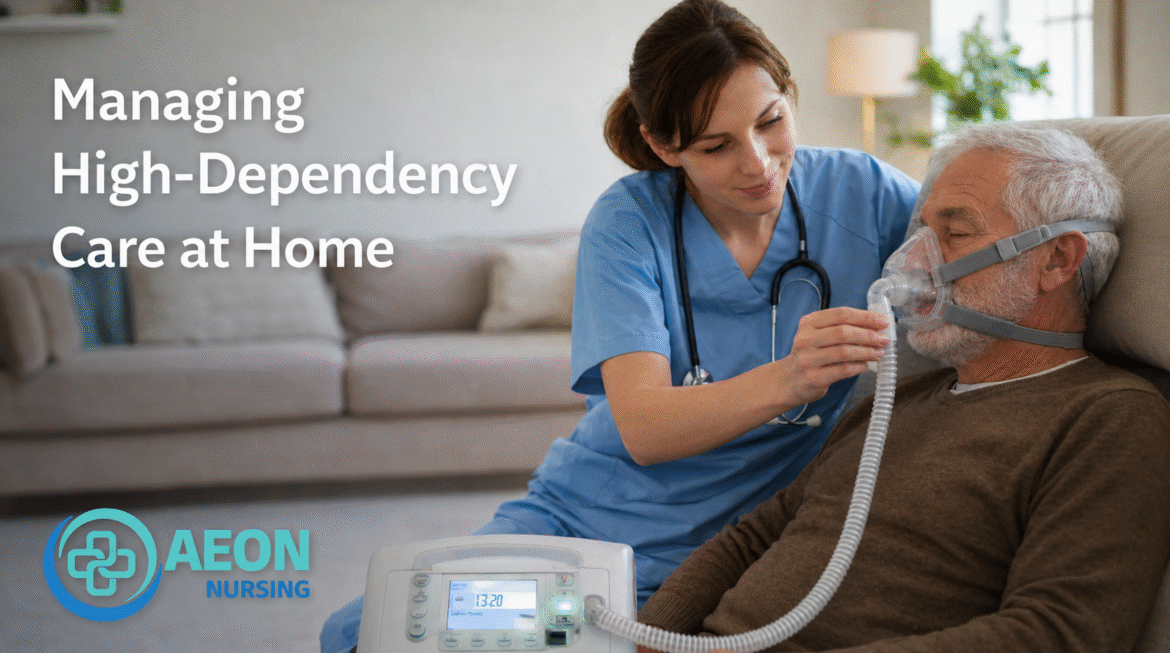
High Dependency Patients Outside Hospital: 7 Essential Checks
Care for high dependency patients outside hospital can support a person whose health, mobility or daily routines require more coordination than standard homecare usually provides. The aim is not to recreate a hospital ward in someone’s house. It is to build a safe, personalised arrangement around assessed needs, professional instructions, competent staff and the life the person wants to continue at home. The term high dependency describes a level of support, not one diagnosis or one fixed staffing model. One person may need help with breathing equipment, nutrition, medicines, mobility or skin care. Another may need close observation because their …

PEG Feeding at Home: 7 Essential Family Safety Checks
PEG feeding at home can become part of an established daily routine when the person and those supporting them have an individual care plan, practical training, reliable supplies and clear contacts. PEG stands for percutaneous endoscopic gastrostomy: a tube placed through the abdomen into the stomach. The decision to use it and the feeding regimen belong to the relevant clinical and dietetic team. Families may worry about the tube, pump, feeds, fluids, medicines, stoma site, cleaning and what to do if something changes. Those questions are reasonable. The NICE nutrition-support recommendations state that people receiving enteral tube feeding in the …

Nurse-Led Complex Care: 7 Essential Safety Checks
Nurse-led complex care places appropriate registered-nurse input around a person whose support includes clinical, changing or high-dependency needs. The exact nursing role depends on the individual, the provider, commissioned responsibilities and the professionals already involved. It does not mean that a nurse personally completes every daily task or replaces the person’s GP, consultant, specialist team or emergency services. A useful nurse-led complex care model should make assessment, care planning, competence, delegation, monitoring, escalation and review easier to understand. Families need to know who provides clinical oversight, what workers are authorised to do and how new instructions reach the whole team. …

Prevent Hospital Admissions: 7 Essential Home Care Checks
Can complex care at home help prevent hospital admissions? In some circumstances, an assessed and well-coordinated package may help people recognise changes, follow professional plans and access appropriate support earlier. It cannot guarantee admission avoidance, and it should never delay hospital or emergency treatment when that is the safest response. The aim is to distinguish potentially avoidable disruption from care that genuinely requires hospital facilities or specialist assessment. The NHS England urgent community care framework supports teams to balance patient, clinical and system risk so suitable people can receive safe care outside hospital. Those decisions belong to appropriate clinicians and …

Safe Complex Care Discharge Plan: 7 Essential Checks
A safe complex care discharge plan connects the decision that a person can leave hospital with the support they will need at the next destination. It should not be a collection of separate referrals that families must assemble alone. The plan needs clear responsibilities, current clinical information, ready services, appropriate equipment and routes for questions or changes. People with complex needs may require medicines, personal care, mobility support, nutrition, respiratory care, monitoring, rehabilitation or specialist input, but no person needs every element. A safe complex care discharge plan must reflect the individual assessment, the person’s preferences and the professionals who …