Complex Home Care: 7 Essential Checks for Safe Teamwork

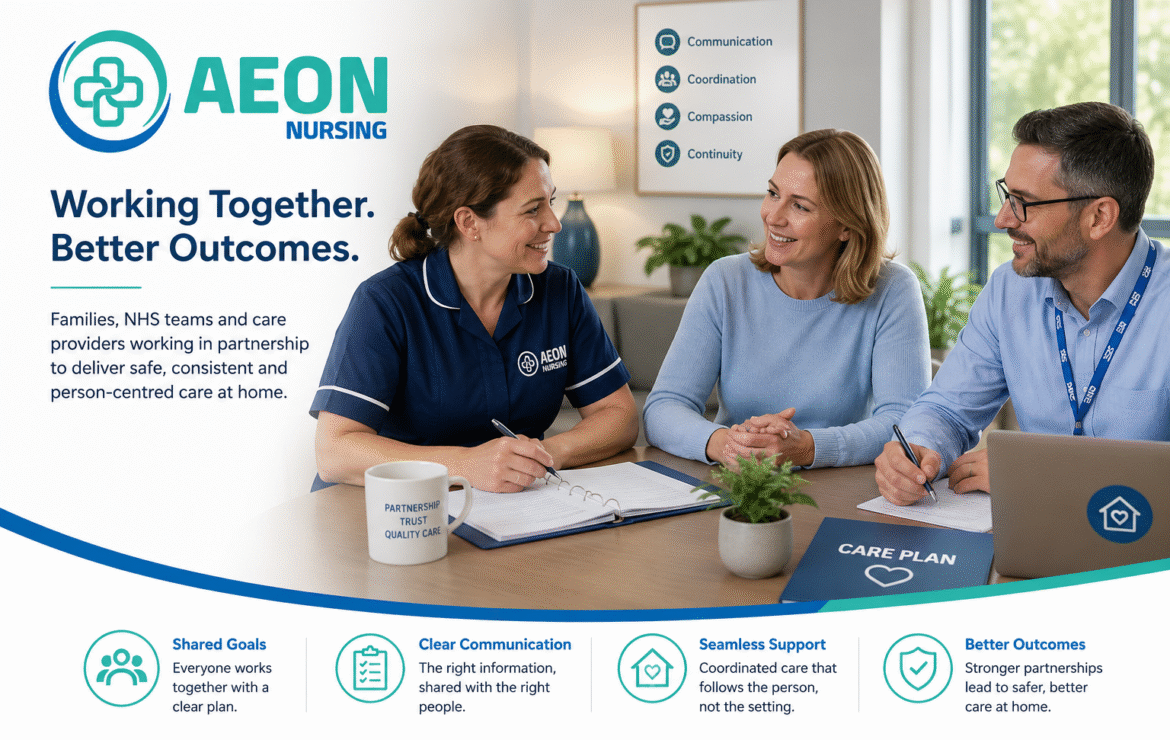
Complex home care often involves more than one source of support. The person and family understand daily life, routines and what has changed. NHS professionals may assess health needs, plan treatment or coordinate discharge. A care provider turns an agreed plan into reliable support in the home.
Problems arise when those parts operate as separate conversations. A family may be asked to repeat information, a provider may receive an incomplete handover, or nobody may be sure who owns the next action. Good coordination does not mean that everybody does everything. It means that roles, information and escalation routes are clear.
This guide uses seven checks to help families understand how joined-up working should look. It does not assume that every person needs the same team. The right arrangement depends on assessed needs, consent, the services involved and what matters to the person receiving care.
This article is general information and does not replace an individual clinical, discharge, social-care or funding plan.
Step 1: Define Every Role in the Complex Home Care Plan
A complex home care plan is easier to follow when each participant’s role is written down. Start with the person receiving care. Record their goals, preferences, communication needs and the decisions they want to make or share with others.
Families may contribute knowledge, emotional support and practical help, but their role should be realistic and agreed. NHS teams may be responsible for clinical assessment, treatment, specialist guidance, community follow-up or commissioning processes. The home-care provider is responsible for the service it has assessed and agreed to deliver.
Ask who holds each professional plan, who can authorise a change and who should be contacted for clarification. A care worker should not be expected to make a decision outside their training or scope. A relative should not be left to interpret conflicting clinical instructions.
Our article explaining what complex care at home involves can help families separate daily support, clinical oversight and wider coordination. The specific combination will be different for each person.
Create a simple contact list with names, roles, routine contact details and out-of-hours arrangements. Keep it with the current care information in the format agreed by the team. Clarity at the start reduces the need to work out responsibilities during a stressful change.
Step 2: Put the Person and Family at the Centre of Complex Care Coordination
Coordination should happen around the person, not around organisational convenience. Ask what the person wants to achieve at home, who they want involved, how they prefer information to be explained and what parts of their life the plan must protect.
The CQC regulation on person-centred care requires care and treatment to reflect people’s needs and preferences. It also supports involvement in decisions, including people close to the individual where appropriate.
Family knowledge can be valuable. Relatives may notice subtle changes, understand communication and know which routines help the person feel settled. Their observations should be heard, but they should not replace the person’s own voice or a professional assessment.
The person should decide who receives information wherever they can do so. If questions about capacity or legal decision-making arise, the relevant professionals must follow the appropriate framework. A general care article cannot determine who has authority in an individual situation.
Use meetings to ask the person what is working as well as what is clinically required. The NICE shared decision-making recommendations encourage clear information, discussion of options and involvement of chosen relatives, friends, carers or advocates.
Step 3: Coordinate NHS Assessment and Complex Home Care Discharge
Hospital discharge can expose gaps quickly. Equipment, medicines, transport, staff availability, community follow-up and information may all need to align before the home plan is workable. Families should know the expected discharge process and which team is coordinating complex actions.
The NHS England model discharge pathway describes early planning, named clinical responsibility and multidisciplinary coordination for more complex discharges. It also recognises families and carers as important care partners.
Before discharge, ask:
- What support has been assessed for the first day and night at home?
- Which equipment must be present and who checks it?
- Which medicines information and current professional plans will accompany the person?
- Which community or specialist teams will follow up?
- Who should the provider contact if information is missing or circumstances have changed?
- What is the person-specific escalation plan?
Our guide to preparing families for complex care after hospital discharge offers a practical companion to this conversation. The article on what makes a safe complex-care discharge plan provides further prompts for the handover.
A proposed discharge date should not lead families or providers to invent missing instructions. Raise gaps through the responsible hospital or community route and document what has been agreed.
Step 4: Translate the Complex Home Care Plan Into Safe Home Routines
A hospital or professional plan becomes meaningful at home only when staff understand how it fits the person’s actual day. The provider needs to translate assessed support into clear routines without changing clinical instructions outside its authority.
Walk through a normal day: waking, washing, dressing, meals, medicines, mobility, equipment, rest, activities, appointments and night-time support. Include the person’s communication, privacy, culture, relationships and preferred level of independence.
Ask which tasks staff can perform, which need competency checks and which remain with another professional. Clarify what should be recorded, what signs require reporting and what action the worker takes if the routine cannot be completed as planned.
Nurse-led oversight may help connect professional requirements with day-to-day delivery for suitable packages. Our explanation of nurse-led complex care sets out questions families can ask about assessment, supervision and review.
Respect ordinary life. A safe plan should not reduce the person to clinical tasks. Meals, family time, work, education, faith, rest and enjoyable activities may all matter. The team should understand the outcomes the person wants, while being honest about assessed risks and professional advice.
Step 5: Share Information Safely in Complex Care Coordination
Good coordination depends on current information reaching the right people. It does not mean sharing every detail with everyone. Consent, confidentiality, organisational responsibilities and professional record systems still apply.
Agree which document is the current care plan, where it is held and how updates are confirmed. Ask how staff know when a hospital letter, medication instruction, therapy plan or risk assessment has changed. Avoid parallel copies that are updated at different times.
Use structured handovers. They should cover changes, actions, outstanding questions and who owns the next step. Families should not have to remember every message verbally or act as the only communication channel between organisations.
Communication must also be accessible to the person. Explain information at the right pace and in the format they need. Record how they express agreement, discomfort or a change in preference. Where an interpreter, advocate or communication professional is needed, plan this rather than relying on an unsuitable last-minute substitute.
Aeon Nursing’s article on working with NHS Trusts and ICBs describes the wider partnership context. Individual arrangements still need explicit contacts, responsibilities and information-sharing routes.
Step 6: Manage Complex Home Care Changes, Concerns and Escalation Together
Needs may improve, fluctuate or become more complex. The team should agree what counts as a routine update, what triggers a care-plan review and what requires urgent professional or emergency action.
Care workers should follow the person-specific plan and report relevant observations through the agreed route. They should not diagnose a change. Families should know who the provider contacts, when they will be informed and which concerns should go directly to an NHS service.
Ask what happens outside office hours. A list of daytime contacts is not enough if support continues overnight or at weekends. The plan should contain current numbers and clear instructions suited to the individual.
Concerns about the service itself need a separate route. Families and the person receiving care should know how to give feedback, make a complaint or raise a safeguarding concern. The provider should explain how it responds and how care is protected while an issue is reviewed.
For adults with ongoing complex healthcare needs, funding and care planning may involve NHS Continuing Healthcare. The NHS Continuing Healthcare guidance explains the assessment and review process. Eligibility is determined through that process, not by a care provider or by diagnosis alone.
Step 7: Review Complex Care Coordination and the Joined-Up Arrangement
A review should test whether the whole arrangement works, not only whether each organisation completed its own tasks. Ask the person about their experience. Ask the family what is sustainable. Ask staff whether the plan is clear and whether information or equipment gaps are affecting delivery.
Review after a significant change, hospital admission, new professional instruction, staffing problem or repeated communication failure. A regular schedule is useful, but it should not prevent an earlier review when circumstances require one.
Useful review questions include:
- Does the plan still reflect assessed needs and the person’s wishes?
- Are roles and contacts still correct?
- Are staff working from the current instructions?
- Are family responsibilities realistic?
- Have concerns been resolved and learning shared?
- Does another professional need to reassess part of the plan?
Our family guide to NHS Continuing Healthcare at home explains why assessment, package planning and later review are distinct stages.
Strong complex home care coordination is visible when everyone can explain the current plan, their own responsibility and the next action. It should make the arrangement clearer for the person rather than surrounding them with more meetings and uncertainty.
Frequently Asked Questions
Who should coordinate complex home care?
The answer depends on the services and decisions involved. A named professional may coordinate a discharge or clinical pathway, while a provider coordinates its own care package. Ask for named contacts and clarify who owns each action rather than assuming one person controls the whole system.
What information should families bring to a planning meeting?
Bring current information you are authorised to share, a list of medicines or professional plans where relevant, contact details, questions and a realistic description of daily routines. The responsible professionals should confirm clinical instructions rather than asking the family to recreate them.
Should family carers be expected to cover gaps?
Family support should be discussed honestly and agreed. A plan should not assume unlimited availability or place relatives into clinical roles they are not trained or willing to perform. Ask what happens if a family member becomes unavailable.
What happens when different professionals disagree?
Raise the conflict through the named responsible professionals and ask for a clear, documented resolution. Care staff and relatives should not choose between conflicting clinical instructions themselves. Urgent concerns should follow the person-specific escalation route.
How can the person stay involved when communication is difficult?
Use their preferred communication method, allow enough time and involve an advocate, interpreter or communication professional where appropriate. Family knowledge may help, but the person should still be addressed directly and included as fully as possible.
Talk Through the Options
Aeon Nursing can discuss the complex home care support it may be able to provide and how its role could fit alongside the person, family and existing professional teams. Suitability and the next step remain subject to assessment and the information available.
Bring a list of current services, named contacts and unresolved questions. The aim of an initial discussion is clarity about the potential provider role, not a promise about decisions that belong to an NHS, local-authority or other professional process.
Planning a Sustainable Arrangement
Create a one-page coordination summary in the format agreed by the relevant team. Include the person’s priorities, named contacts, routine responsibilities, review date and the route for changes. Do not copy sensitive information more widely than necessary.
When several organisations attend a meeting, end with a short action summary. Each action should have one named owner and a realistic date. Record questions that remain unanswered and identify who will take them back to the appropriate team. A list of actions without owners can leave the family chasing everybody after the meeting.
Distinguish information that staff need before the next visit from background information that can follow later. Urgent care instructions must use the established professional route. Routine documents should still be shared promptly, but speed should not lead people to use insecure personal channels or bypass consent.
Agree a sensible rhythm for communication. Some packages may need regular multidisciplinary contact, while others need a review only when a defined change occurs. Meetings should have a purpose and should not repeatedly ask the person or family for information already available in the current record.
At each review, close the loop on earlier actions. Confirm what was completed, what remains outstanding and whether the delay changes the care plan. If an action belongs to another organisation, record the route used to escalate it rather than quietly transferring responsibility to the family.
Keep contingency contacts current. A plan written at discharge can become unsafe if telephone numbers, service hours or named professionals change. Check these details during reviews and after any move between hospital, community and home-based services.
Make space for staff feedback too. Workers who provide daily support may notice that an instruction is unclear, a routine no longer works or equipment is affecting delivery. Their observations should follow the provider’s reporting process and reach the professional who can assess what, if anything, needs to change.
Decide how new information will be checked before it changes daily support. A message from an appointment may need confirmation, interpretation or a revised professional plan. The provider should explain who reviews the information and how authorised changes reach staff.
It can also help to keep a short list of unresolved system questions separate from the person’s daily care record. This allows coordinators to follow up funding, equipment or service issues without making the frontline instructions difficult to use.
Good coordination should make life at home more predictable. It should give the person and family confidence about who is involved, while allowing each professional and organisation to remain accountable for its own decisions.
A clear complex home care summary should show the current plan, responsible contacts and the next review point without asking relatives to interpret professional instructions.
Reliable complex home care also depends on everyday feedback reaching the person who can assess it, authorise a change or explain why the existing plan remains appropriate.
When complex home care is coordinated well, the person should experience one understandable arrangement even though several people and organisations contribute to it.
Plan for transitions. Staff changes, appointments, respite, family holidays and hospital visits can all disrupt routines. Agree how updated information and responsibilities will be handed over before the change happens.
Protect family wellbeing. Decide what relatives can contribute, when they need updates and who steps in if they are unavailable. Joined-up care should reduce pressure on one relative rather than quietly making them the unpaid coordinator of every service.
Keep the person’s ordinary life visible. Reviews should ask whether support still enables their routines, relationships and choices as well as whether required tasks are completed. A sustainable arrangement balances safety, professional responsibilities and the outcomes that matter to the person.
Important Information
This article is for general information only. It does not replace medical advice, a clinical or social-care assessment, a hospital discharge plan, legal advice or an individual funding decision. Roles and responsibilities must be confirmed with the relevant organisations and qualified professionals involved in the person’s care.
If someone appears to be in immediate danger or has a life-threatening emergency, call 999. For non-emergency changes, use the contacts and escalation instructions in the current care or professional plan.
About the Author
Author & Content Writer: Dr Naeem Aslam
Last updated: July 2026
Write a Comment