Home Care Emergency Plan: 7 Smart Checks

A practical home care emergency plan guide for families: seven questions about contacts, routines, information, continuity and next steps. …
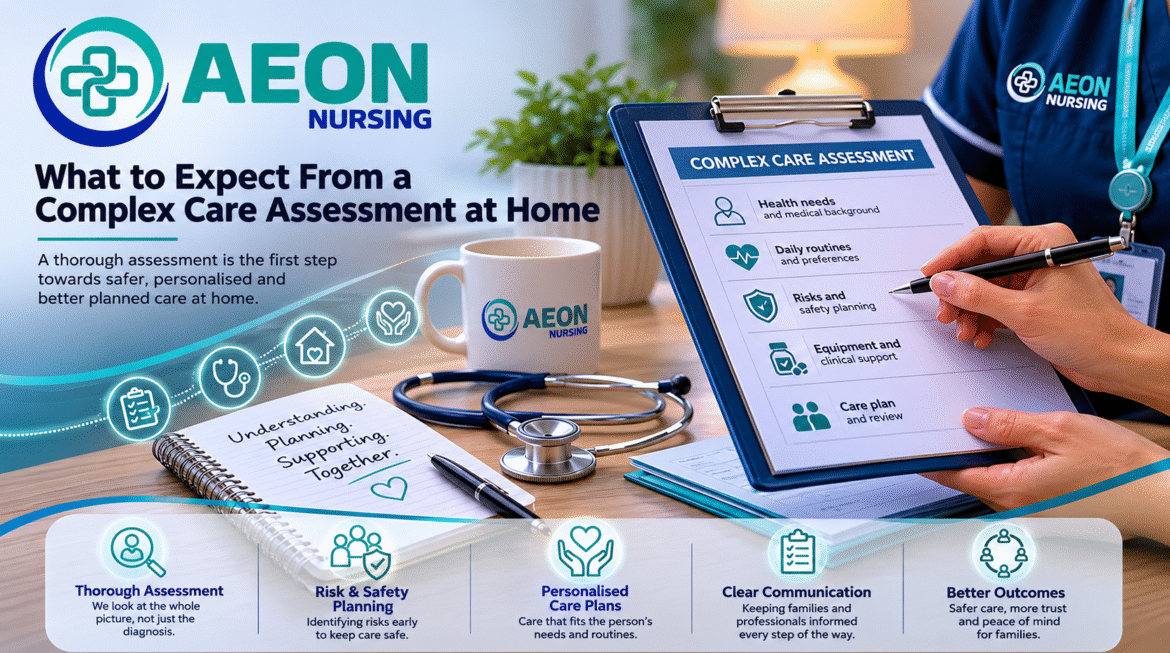
Complex Care Assessment at Home: 7 Safe Checks
A complex care assessment at home is a conversation and information-gathering process, not simply a form. It should help the person, family and relevant professionals understand current needs, what matters day to day, who is involved and what still needs assessment or a decision. The right complex care assessment at home is individual. It should not be based only on a diagnosis, a hospital summary or assumptions about what another person needed. The person’s wishes, current circumstances and the advice of relevant professionals matter. This guide offers seven safe checks to help families and referrers prepare for a complex care …
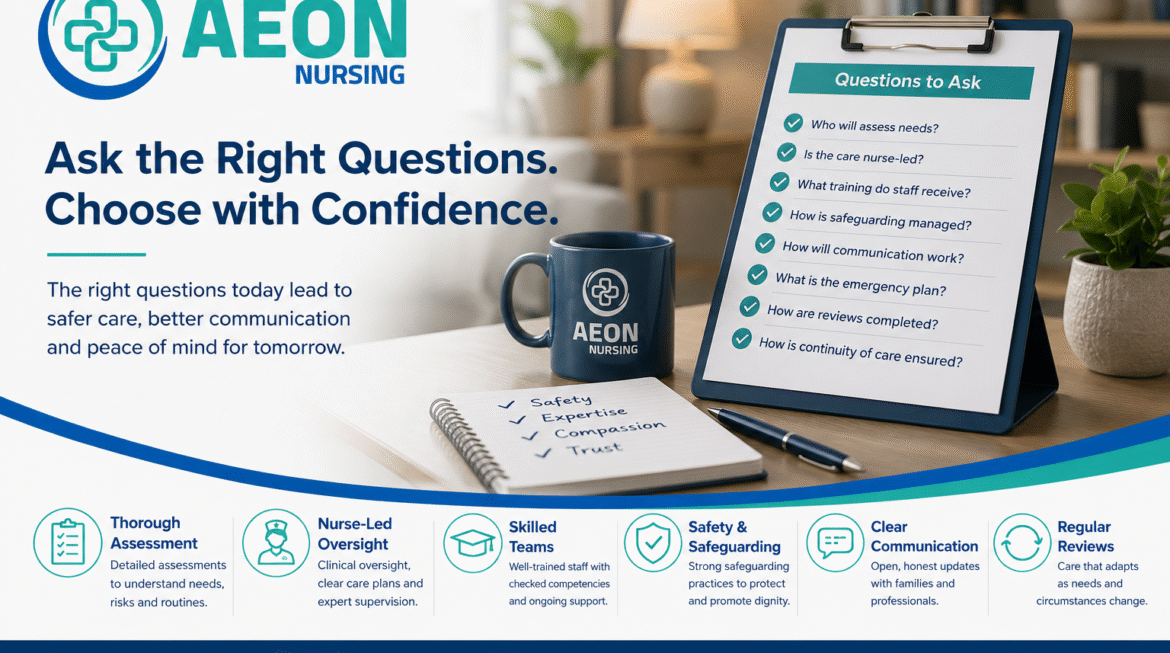
7 Essential Questions Before Arranging Complex Care at Home
The most useful questions before arranging complex care at home are the ones that reveal how a proposed service will work in real life. Families need more than reassuring promises. They need to understand the assessment, staffing, care plan, communication, safeguards, costs and review process before support begins. This can be difficult when a relative is leaving hospital, needs have changed quickly or several organisations are involved. A family may be speaking with ward staff, community professionals, an NHS team, social care and several providers at the same time. Writing down the same core questions for every conversation can make …
Care Plan Review at Home: 7 Smart Checks
A practical guide to the questions families can ask when needs, routines or priorities change and a care plan review at home is needed. …
How to Choose a Safe Complex Care Provider at Home
How to Choose a Safe Complex Care Provider at Home Choosing a complex care provider at home is a serious decision. Families often make this choice during a stressful time. A loved one may be leaving hospital. A child may need more support at home. An adult with complex needs may need a safer care plan. Therefore, families need clear information before they decide. Complex care at home is not the same as basic help with daily tasks. It may involve support with serious health conditions, mobility needs, respiratory care, PEG feeding, seizure risk, brain injury, spinal injury, palliative needs, …
Inclusive Culturally Sensitive Care at Home: 7 Smart Checks
Inclusive culturally sensitive care at home begins with a simple principle: the person receiving support should not have to set aside their identity, routines or way of communicating because care has entered their home. Good support should recognise the whole person, including their health needs, relationships, beliefs, preferences and the things that make daily life feel familiar. This matters in every type of home care. It becomes especially important when support is intimate, long term or complex. A carer may help with washing, dressing, meals, medicines, mobility or communication. Those tasks can only be genuinely person-centred when the person feels …
Complex Home Care: 7 Essential Checks for Safe Teamwork
Complex home care often involves more than one source of support. The person and family understand daily life, routines and what has changed. NHS professionals may assess health needs, plan treatment or coordinate discharge. A care provider turns an agreed plan into reliable support in the home. Problems arise when those parts operate as separate conversations. A family may be asked to repeat information, a provider may receive an incomplete handover, or nobody may be sure who owns the next action. Good coordination does not mean that everybody does everything. It means that roles, information and escalation routes are clear. …
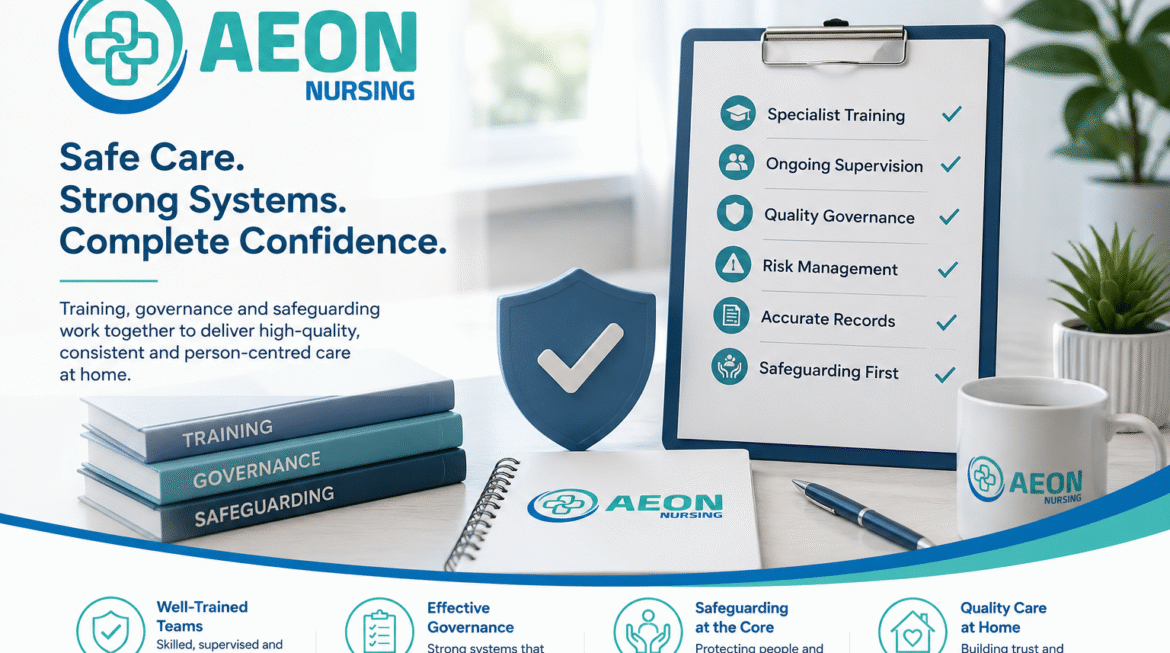
Training, Governance and Safeguarding: 7 Essential Checks for Safe Care
Training, governance and safeguarding are the systems that turn a promise of good home care into safe, consistent practice. Families naturally notice whether staff are kind, punctual and respectful. When needs are complex, they also need confidence that the people providing support have been prepared for the individual care plan, that concerns are reviewed properly and that everyone knows how to respond if something changes. These three areas are connected. Training helps staff understand what to do and why it matters. Governance checks whether plans, records, supervision and outcomes are working in practice. Safeguarding creates clear routes for preventing, recognising …

Palliative Care at Home: 7 Early Planning Steps
When a person is living with an advanced or life-limiting illness, families are often trying to hold two important things together: the person’s comfort and dignity, and the practical reality of organising support. Palliative care at home can be part of that conversation. It is not a single service or a decision that one family has to make alone. It is a way of planning care around the person’s needs, wishes and changing circumstances, with the right health and social-care professionals involved. Starting the conversation early does not mean giving up hope or assuming that a crisis is about to …
NHS Continuing Healthcare at Home: What Families Should Know
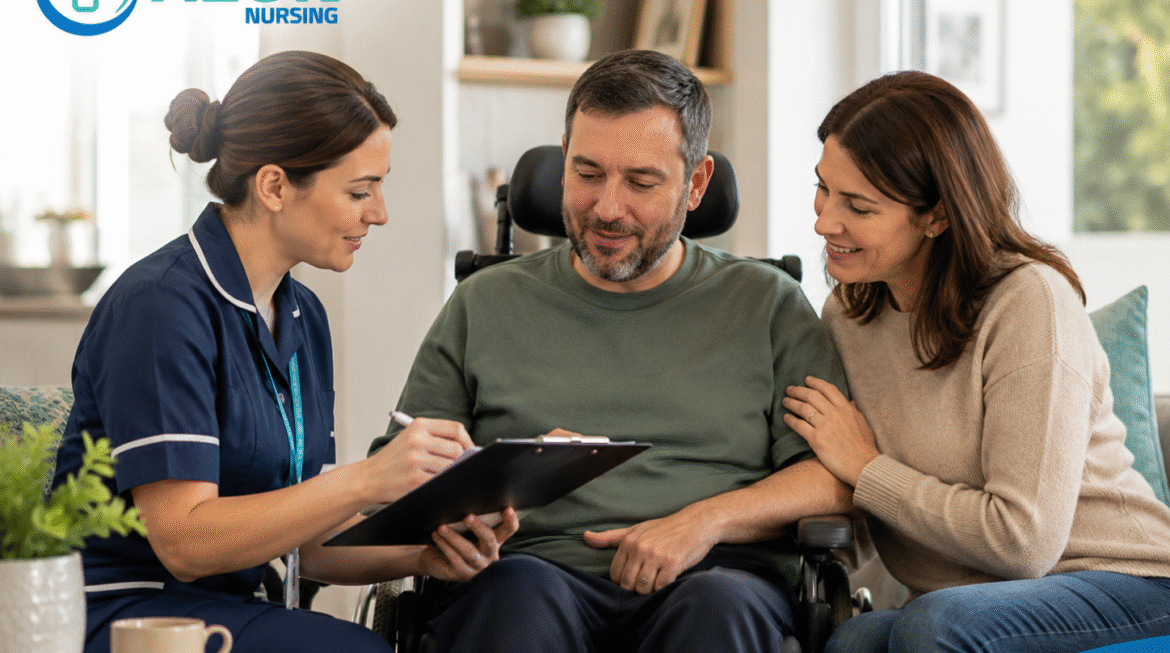
NHS Continuing Healthcare at Home: What Families Should Know Funding is one of the biggest worries families face when someone has ongoing complex health needs at home. Even when the need for care feels clear, the route to paying for that care can seem confusing and stressful. This is why NHS Continuing Healthcare, often called CHC, matters so much. The NHS says that NHS Continuing Healthcare is a package of ongoing care arranged and funded solely by the NHS for some adults with long-term complex health needs. The NHS also explains that care can be provided outside hospital, including in …