
NHS Continuing Healthcare at Home: What Families Should Know

NHS Continuing Healthcare at Home: What Families Should Know Funding is one of the biggest worries families face when someone has ongoing complex health needs at home. Even when the need for care feels clear, the route to paying for that care can seem confusing and stressful. This is why NHS Continuing Healthcare, often called CHC, matters so much. The NHS says that NHS Continuing Healthcare is a package of ongoing care arranged and funded solely by the NHS for some adults with long-term complex health needs. The NHS also explains that care can be provided outside hospital, including in …

Clinically Led Home Care: 7 Essential Checks for Safe Support
Clinically led home care is designed for situations where ordinary day-to-day assistance may not be enough on its own. A person may need support that depends on structured assessment, careful risk planning, competent staff, timely monitoring and clear professional escalation. The aim is not to make home feel like a hospital. It is to bring the right level of oversight into a familiar environment while protecting dignity, choice and ordinary life. The phrase can be confusing because providers use it in different ways. Families should therefore look beyond the label and ask who provides the clinical leadership, what decisions that …

Loved One Needs Home Care? 7 Safe First Steps
When a loved one needs home care, the first decision can feel much bigger than it really is. Families may notice missed meals, reduced confidence, medication confusion, falls, increasing fatigue or a growing dependence on relatives. They often wonder whether they are overreacting, whether they have waited too long or whether raising the subject will upset the person they want to help. A calm process is usually more useful than trying to choose a service immediately. Start by recording what has changed, listening to the person and identifying any urgent concerns. Then gather the assessments and information needed to understand …
Respiratory Complex Care at Home: 7 Essential Safety Checks
Respiratory complex care at home can help a person live in familiar surroundings while following an assessed plan for breathing support, monitoring, equipment and daily care. It may be relevant to people with long-term respiratory disease, neurological conditions, spinal injury or another condition that affects breathing. The exact package must always reflect the individual rather than a broad diagnosis. Home can offer comfort, routines, family contact and greater control over ordinary life, but it does not remove clinical risk. Respiratory needs can change, equipment can fail and symptoms may require urgent assessment. Safe community respiratory care therefore depends on current …
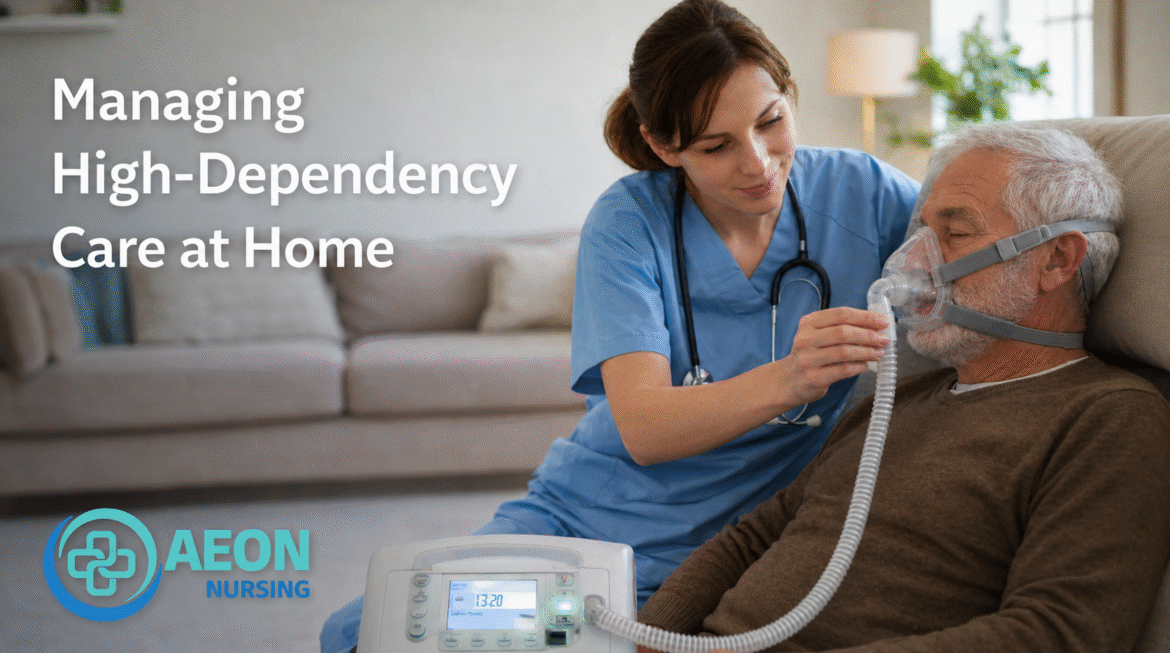
High Dependency Patients Outside Hospital: 7 Essential Checks
Care for high dependency patients outside hospital can support a person whose health, mobility or daily routines require more coordination than standard homecare usually provides. The aim is not to recreate a hospital ward in someone’s house. It is to build a safe, personalised arrangement around assessed needs, professional instructions, competent staff and the life the person wants to continue at home. The term high dependency describes a level of support, not one diagnosis or one fixed staffing model. One person may need help with breathing equipment, nutrition, medicines, mobility or skin care. Another may need close observation because their …

Cost of Complex Care at Home: 7 Essential UK Checks
The cost of complex care at home is rarely one simple national figure. A package may involve different hours, staffing levels, clinical oversight, specialist skills, equipment, travel, night support and contingency arrangements. The right starting point is therefore an assessment of the person’s needs and outcomes, followed by a written explanation of what the proposed service includes. Families often need to consider several possible funding routes at the same time. Support may be privately funded, arranged through a local authority, commissioned through the NHS, or involve more than one organisation. Eligibility and contributions depend on formal processes and individual circumstances. …

Planning Ahead at Home: 7 Essential Checks for MND, MS and Parkinson’s
Planning ahead at home can give a person living with motor neurone disease (MND), multiple sclerosis (MS) or Parkinson’s disease more opportunity to influence how support fits around daily life. It does not mean predicting every change or assuming that everyone follows the same path. It means recording what matters now, identifying foreseeable practical questions and knowing who to contact when needs alter. These three neurological conditions are different. Symptoms, progression, treatment and support vary between people and over time. The NHS overview of motor neurone disease explains that MND can affect movement, communication, breathing, swallowing and daily care, while …

Hospital to Home Checklist: 7 Essential Safety Checks
A hospital to home checklist can help a person, their family, the hospital team and the onward care provider confirm what must be ready before discharge. Returning home may be welcome, but a complex transition can involve new medicines, equipment, clinical instructions, mobility changes, follow-up and a care package that must work from the first shift. The checklist should support—not replace—the formal discharge process. The NHS guide to being discharged from hospital explains that people who need specialised support should receive a care plan covering treatment, responsibility, monitoring, review and emergency contacts. Ask the relevant team how this applies to …

PEG Feeding at Home: 7 Essential Family Safety Checks
PEG feeding at home can become part of an established daily routine when the person and those supporting them have an individual care plan, practical training, reliable supplies and clear contacts. PEG stands for percutaneous endoscopic gastrostomy: a tube placed through the abdomen into the stomach. The decision to use it and the feeding regimen belong to the relevant clinical and dietetic team. Families may worry about the tube, pump, feeds, fluids, medicines, stoma site, cleaning and what to do if something changes. Those questions are reasonable. The NICE nutrition-support recommendations state that people receiving enteral tube feeding in the …

Nurse-Led Complex Care: 7 Essential Safety Checks
Nurse-led complex care places appropriate registered-nurse input around a person whose support includes clinical, changing or high-dependency needs. The exact nursing role depends on the individual, the provider, commissioned responsibilities and the professionals already involved. It does not mean that a nurse personally completes every daily task or replaces the person’s GP, consultant, specialist team or emergency services. A useful nurse-led complex care model should make assessment, care planning, competence, delegation, monitoring, escalation and review easier to understand. Families need to know who provides clinical oversight, what workers are authorised to do and how new instructions reach the whole team. …